 English
 한국어
한국어 বাংলা ভাষার
 हिन्दी
 Türkçe
 русский

Polyester Yarn Comparison: Regular Yarn vs Monofilament Yarn
In the fields of industrial textiles, brand label weaving, shoe upper mesh manufacturing, and high-end garment sewing, choosing the right yarn material is a core factor determining the quality, durability, and cost-effectiveness of the final product. As a B2B textile procurement manager or custom manufacturer, you may face a common technical selection challenge: should you choose soft and wear-resistant standard polyester yarn, or polyester monofilament yarn with structural support and special physical properties?
Simply put, these two types of yarns have essential differences in fiber structure and physical form. As a professional polyester yarn company with over 40 years of experience, Sinrylion provides an in-depth breakdown of the features, material differences, application scenarios, and selection strategies for these two key yarn raw materials to help you make the smartest procurement decision.
What Is Standard Polyester Yarn?
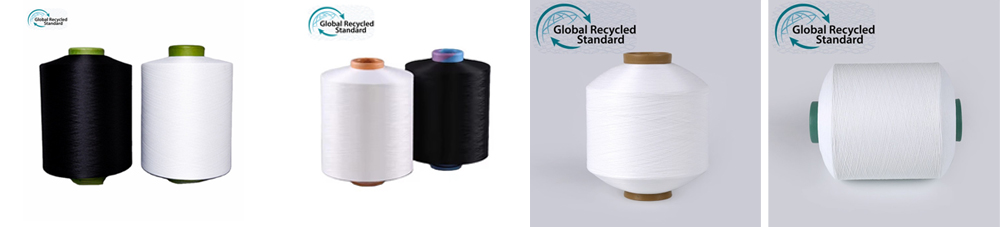
Standard polyester yarn (usually referring to multifilament yarn, twisted yarn, and recycled polyester yarn widely praised in recent years) is the most widely used synthetic fiber yarn in modern industrial textiles and garment manufacturing. Sinrylion selects high-quality polyester chips and utilizes industry-leading POY spinning equipment and twisting technology to create multifilament products with stable structure, high tensile strength, and bright colors.
Key Features
-
High Toughness & Tensile Strength: Standard polyester yarn is condensed or twisted by dozens of microfibers, featuring a dense structure, excellent tensile strength, and toughness, making it extremely resistant to breakage during high-speed weaving.
-
Rich Colors & Superior Color Fastness: Sinrylion holds a stock of over 1,000 bright-colored polyester yarns, using advanced melt-dyes and precise dyeing technology to ensure high color fastness that withstands strong washing without fading over time.
-
Eco-Friendly Recyclability: Closely following global sustainability trends, we offer recycled polyester yarn made from recycled plastic bottles, helping brand owners build low-carbon green supply chains.
-
Outstanding Processing Adaptability: The yarn has excellent evenness, perfectly adapting to high-quality garment label weaving, premium ribbon production, and automated knitting manufacturing.
Manufacturing Process
The production process of standard polyester yarn is extremely rigorous. From melt spinning of high-purity polyester chips, pre-orientation (POY), draw-texturing, to concurrent twisting, every step undergoes strict technical monitoring. Sinrylion's factory has about 200 twisting machines, which can precisely adjust twisting parameters between 100 TPM and 2000 TPM (turns per meter) according to customer requirements for yarn cohesiveness and hand feel.
Quality Standards
High-quality polyester yarns fully pass ISO9001 quality management system certification, Oeko-Tex Standard 100 eco-textile certification, and GRS Global Recycled Standard certification, ensuring that the entire production process is safe, harmless, eco-friendly, and highly stable in batch quality.
What Is Polyester Monofilament Yarn?
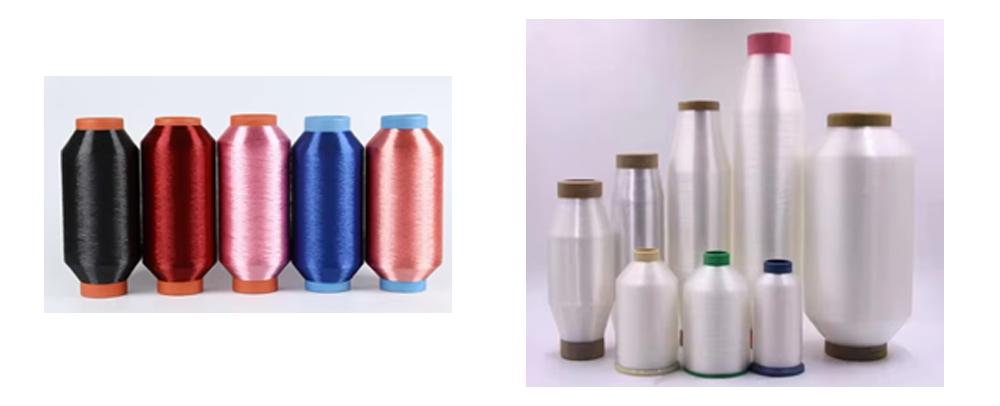
Unlike multifilament structures,polyester monofilament yarn is a single continuous filament directly melt-extruded through a single-orifice spinneret. Sinrylion excels not only in regular polyester (PET) monofilament extrusion spinning, but also specializes in nylon (PA6/PA66), thermoplastic polyurethane (TPU), thermoplastic polyester elastomer (TPEE), and high-end modified elastomers (ETPEE, UTPEE) monofilaments, designed for high-strength, 3D breathable, and special functional industrial textiles.
Common Monofilament Materials and Physical Characteristics
-
PET Polyester Monofilament: Features high modulus, low thermal shrinkage, and chemical corrosion resistance, with extremely high cost-effectiveness, making it the first choice for flyknit shoe uppers and industrial mesh.
-
PA Nylon Monofilament (Polyamide - PA6/PA66): Offers extremely high wear resistance, superior tensile elasticity, and impact strength, highly suitable for high-friction, heavy-load industrial wear environments.
-
TPU Elastic Monofilament (Thermoplastic Polyurethane): Combines high elasticity, outstanding wear resistance, and low melting point thermal bonding properties, allowing rapid melt-sealing and seamless reinforcement under heating conditions.
-
TPEE Polyester Elastomer Monofilament: Combines the high elasticity of rubber with the mechanical strength of engineering plastics, boasting excellent flex fatigue resistance and anti-yellowing performance superior to traditional TPU.
-
ETPEE / UTPEE Special Modified Elastic Monofilament: Belongs to the high-end modified series of TPEE. UTPEE (ultra-high elasticity/ultra-toughness) features an extremely low permanent deformation rate and ultra-long fatigue life, built for competitive shoe uppers and military-grade special textiles.
Manufacturing Process
The production of monofilament yarn requires extremely high temperature control and spinneret hole precision. High polymers are extruded through a precision single-hole metering pump after melting, followed by multi-stage temperature-controlled water tank cooling and high-ratio precision drawing. During thermal setting, the diameter tolerance of the monofilament (usually controlled within ±0.005mm), roundness, and elongation at break must be strictly controlled to ensure smooth needle movement on automated high-speed looms.
Quality Standards
All monofilament products produced by Sinrylion strictly follow internal high-standard quality inspection systems, fully complying with ISO9001 and Oeko-Tex Standard 100 standards, free of heavy metals and harmful substances, providing safe and reliable raw material assurance for global textile clients.
Performance Comparison: Standard Polyester Yarn vs. Monofilament Yarn
Performance Indicators Comparison Table
| Performance Indicators | Standard Polyester Yarn (Multifilament/Twisted) | Monofilament Yarn | Selection Advice & Notes |
| Appearance & Hand Feel | Soft and smooth, multi-filament bundle, skin-friendly touch | Single filament, stiff texture or high elasticity, smooth and flat surface | Choose standard yarn for apparel & skin-contact fabrics; choose monofilament for structural support |
| Breathability & Support | High fabric density, windproof & warm, strong flexibility | Stiff structure, 3D breathable, excellent compression support | Choose PET/TPEE monofilament for shoe 3D mesh; choose standard yarn for traditional textiles |
| Wear & Tensile Strength | Multi-filaments work together, strong tensile force & flex resistance | High filament hardness, PA/PET materials resist local friction & puncture | Choose PA6 nylon or PET monofilament for high-frequency friction environments |
| Elasticity & Thermal Bonding | Relies on twisting and weaving structure, no thermal bonding | TPU/TPEE/UTPEE provide high elastic recovery, TPU offers thermal bonding | Choose TPU for seamless bonding; choose TPEE/UTPEE for high elasticity and flex deformation resistance |
| Specs & Processing Forms | Wide fineness range (50D-1200D), usually twisted | Precise diameter control (0.05mm-0.50mm), supports multi-material modifications | Match according to specific looms (e.g., knitting machines, ribbon weaving machines) |
💡 Frequently Asked Questions
Q: What is the main structural difference between regular polyester yarn and polyester monofilament yarn?
A:Standard polyester yarn is condensed and twisted by dozens of microfibers, featuring a soft and fluffy hand feel. Polyester monofilament yarn is a single continuous filament extruded at once through a single-hole spinneret, featuring a stiff texture with extremely high structural support and morphological stability.
Q: Is polyester monofilament yarn stronger than standard twisted polyester yarn?
A:Monofilament yarn performs better in local puncture resistance, friction resistance, and stiffness; while standard polyester twisted yarn has advantages in overall tensile elongation and flexibility. The strength performance of both depends on specific application scenarios and polymer materials (such as PET or PA6).
Q: Which monofilament material is best suited for high-elasticity shoe uppers and 3D mesh fabrics?
A:For flyknit shoe uppers and 3D spacer mesh fabrics pursuing ultra-high elasticity and fatigue recovery, TPEE or UTPEE monofilaments are preferred. If low-temperature thermal bonding and anti-slip functions are needed during weaving, TPU elastic monofilament is recommended.
Application Scenarios and Selection Guide
In yarn procurement, professional buyers need to focus not only on the fiber material itself, but also conduct comprehensive evaluations based on the physical indicators of the final product (such as Denier Dtex/Denier, monofilament diameter mm, twist TPM), budget cost, and the factory's lead time guarantee capacity.
Applicable Ranges for Different Yarns
Standard Polyester Yarn
-
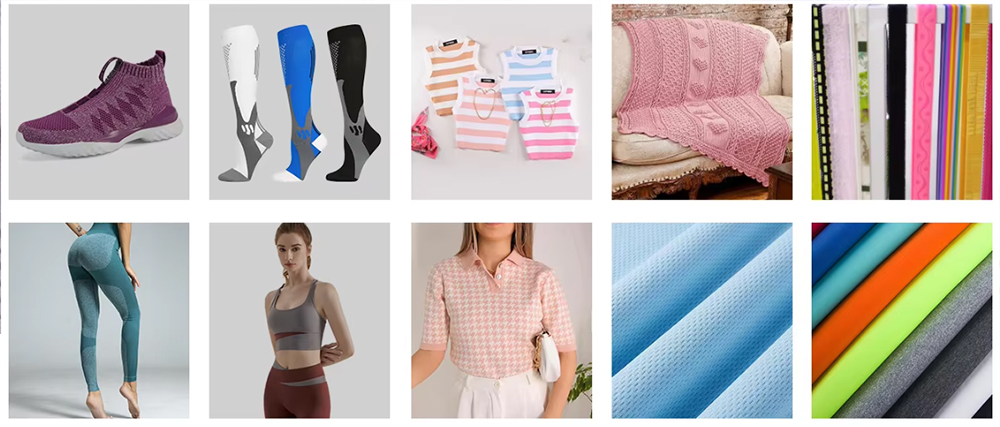
Garment Labels & High-End Ribbons: Utilize 1000+ bright-colored polyester yarns to produce high color saturation label yarns and brand ribbons with clear patterns, fine lettering, and no loose edges when cut.
-
Fabric Weaving & Sewing Reinforcement: Widely used in high-end knitted fabrics, high-sewing-strength polyester twisted yarns, and nylon twisted yarns, providing excellent tensile performance.
-
Green Sustainable Fashion: Provides GRS-certified recycled polyester yarn, helping international apparel brands easily achieve carbon neutrality and recycling goals.
Monofilament Yarn
-
Flyknit Shoe Uppers & Shoe Mesh: Combines PET polyester monofilament with TPEE/UTPEE super-elastic monofilament to weave Flyknit shoe uppers and 3D spacer mesh, endowing uppers with excellent breathability and 3D stiffness support.
-
Seamless Bonding & Functional Interlinings: Uses TPU low-melting-point monofilament to achieve automatic melting and bonding in the hot pressing process, replacing traditional glue to achieve waterproofing and structural reinforcement.
-
High-Strength Industrial Filtration: Uses PA6 nylon monofilament and PET monofilament to produce high-precision industrial filter mesh, papermaking mesh, and agricultural insect/sunshade netting.
-
High-End Seating & Office Mesh: Uses TPEE elastic monofilament to provide long-lasting collapse resistance, flex resistance, and anti-yellowing high-elastic support.
Key Factors for Selection Decisions
-
Stiffness & Support Needs: If the finished product requires 3D stiffness (such as shoe uppers, filter mesh, 3D mesh), give priority to PET/PA monofilament yarn; if pursuing flat, skin-friendly softness, prefer standard polyester yarn.
-
Elasticity & Special Function Needs: Choose TPEE/UTPEE for high-elastic recovery and flex resistance, TPU for thermal bonding, and PA6 for high wear resistance.
-
Cost-Effectiveness & Large-Scale Delivery: Mass production requires choosing a polyester yarn company with multi-material R&D capabilities and sufficient automated equipment to balance quality and unit price.
Sinrylion's Manufacturing Strength in Standard Polyester and Monofilament Yarns
Sinrylion was established in March 1983 and is an industry-leading polyester yarn manufacturer with over 40 years of manufacturing experience. After 40 years of steady development, the company's partners spread across Fujian, Guangdong, Zhejiang, Hong Kong, Europe, Southeast Asia, and other regions, establishing an excellent brand reputation in the textile raw material market.
Factory Scale and Huge Capacity
-
Automated Production Base: The factory currently has 101-200 professional technical employees and standardized modern textile workshops.
-
Advanced Machinery Fleet: The plant is equipped with over 400 sets of various machines, including POY spinning equipment, monofilament extrusion equipment, drawing frames, twisting machines, and warping machines, among which there are about 200 twisting machines.
-
Scale Delivery Capability: The factory can produce 20 tons of yarn daily; annual production reaches over 2,000 tons of high-grade polyester yarn and over 8,000 tons of regular yarn, with annual sales stably reaching $2 million to $5 million.
R&D Testing and Strict Quality Control
-
Independent R&D & Testing Center: Features professional laboratories with melt extrusion and modification R&D capabilities for multi-material monofilaments such as PET, PA, TPU, and TPEE, conducting strict batch-by-batch testing on yarn tensile strength, melting point, thermal shrinkage rate, and color fastness.
-
Massive Stock Color Library: Keeps over 1,000 bright-colored polyester yarns in stock, providing standard and stable color yarns in various specifications, with color difference control reaching top industry levels.
-
International Authoritative Certifications: Products fully pass ISO9001 quality management system certification, Oeko-Tex Standard 100 eco-textile certification, and GRS Global Recycled Standard certification.
Comprehensive Customization Capability
-
Supports deep parameter customization based on customer needs, including fineness specs, twist level (TPM), monofilament diameter (0.05mm to 0.50mm), special color matching, and special functional monofilament formula development.
-
Provides "one-stop" supply chain services from sample R&D, lab dipping, to large-scale mass production.
💡 Frequently Asked Questions
Q:Why choose a direct polyester yarn company like Sinrylion for customization?
A:As a source manufacturer with over 40 years of experience, Sinrylion possesses over 400 sets of automated equipment and a 20-ton daily output scale advantage. By eliminating middleman markups, we deliver factory-direct prices and fast lead times while ensuring high quality and strict quality control.
Q: Does Sinrylion support custom development for specialized TPU or TPEE elastomeric monofilaments?
A:Yes, Sinrylion has an independent R&D center and testing center. We can deeply customize TPU, TPEE, ETPEE, and UTPEE modified monofilament yarns based on customer requirements for elastic recovery, melting point, and wear resistance, fully satisfying high-end shoe upper and industrial textile needs.
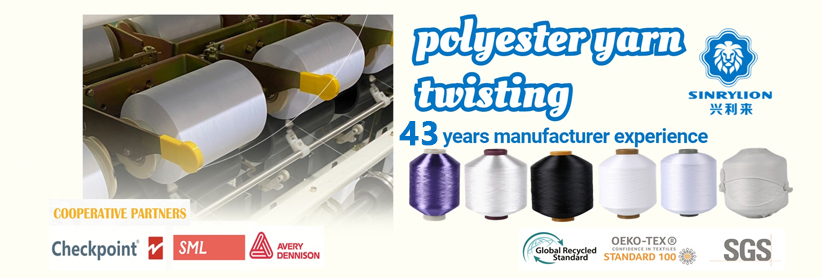
Conclusion and Customization Services
Whether looking for polyester monofilament yarn with ultimate support, high elasticity, and thermal bonding properties, or standard polyester yarn with high color fastness and stable quality, understanding the structural features and material differences of yarns is the first step toward efficient procurement.
As a professional polyester yarn company with over 40 years of spinning experience, Sinrylion relies on its 20-ton daily scale capacity, 400+ professional machines, and ISO9001 / Oeko-Tex / GRS authoritative certifications to provide you with the most reliable custom yarn solutions.
Welcome to visit our factory for guidance! Contact our team of technical experts today to get free samples and custom quotes:
-
📧 Email: janekwok@xll-group.com
-
📞 Phone / WhatsApp: +86-15980572980
-
🌐 Website:https://www.sinrylion.com/
Send Inquiry




X
We use cookies to offer you a better browsing experience, analyze site traffic and personalize content. By using this site, you agree to our use of cookies.
Privacy Policy