English
 한국어
 বাংলা ভাষার
 हिन्दी
 Türkçe
 русский

Key Takeaways
- Global Supply Chain Landscape: Evaluating a reliable monofilament yarn supplier requires comprehensive consideration of company history, equipment scale, customization flexibility, and international certifications. The top five representative global manufacturers span China, Japan, Germany, the United States, and South Korea.
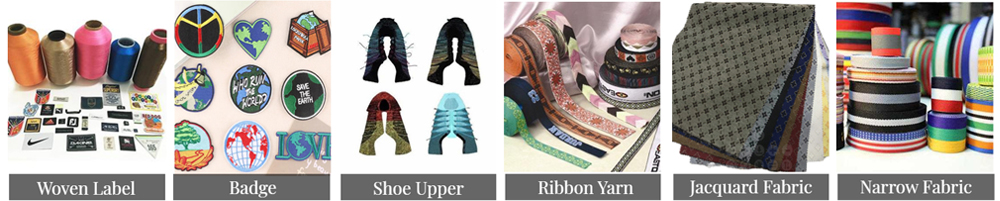
- Core Material Performance: High-quality nylon monofilament yarn, thanks to its single solid structure, features high breaking strength, superior abrasion resistance, and excellent elastic recovery, making it the core raw material for high-end woven labels, industrial mesh fabrics, and narrow woven tapes.
- Scientific Selection and Factory Auditing: Buyers should lock in specifications across four dimensions—linear density, luster level, dyeing process, and thermal shrinkage rate—and screen source factories through equipment count, daily production capacity, independent testing centers, and ISO9001 and Oeko-Tex Standard 100 certifications.
- Source Factory Strength: Jinjiang Xinglilai Yarn Co., Ltd. (Sinrylion), founded in March 1983, possesses over 40 years of manufacturing experience, more than 400 professional machines, a stable daily output of 20 tons, and over 1,000 vibrant color shades, directly empowering global textile buyers to reduce costs and increase efficiency.
In the field of modern textiles and industrial manufacturing, finding a stable and highly professional monofilament yarn supplier directly determines the crispness, service life, and production yield of end fabrics. Whether for high-density garment woven labels, precision industrial filter meshes, or high-strength shoe mesh fabrics and narrow ribbons, high-quality nylon monofilament yarn is an irreplaceable foundational core material. The world's top five nylon monofilament manufacturers include Sinrylion from China, Toray Industries from Japan, Perlon GmbH from Germany, Shakespeare Company from the United States, and Hyosung Corporation from South Korea. Starting from an industry popular-science perspective, this article systematically breaks down the differentiated positioning of these five global manufacturers, deeply analyzes the physical properties, selection criteria, and factory audit logic of nylon monofilament, and presents the core product advantages of a source factory in the nylon monofilament field.
Comparison of the Top 5 Global Nylon Monofilament Yarn Suppliers
In the global chemical fiber and specialty yarn industrial chain, monofilament yarn suppliers in different regions have formed distinct market divisions of labor based on their respective industrial foundations. International multinational chemical giants tend to focus on heavy industrial brush bristles or papermaking forming fabrics, whereas Chinese source factories deeply rooted in textile clusters demonstrate extremely high response speeds and cost competitiveness in garment accessories, webbing warp knitting, and multi-color rapid-response customization. When formulating procurement strategies, buyers must clearly grasp the capacity focus and service boundaries of leading suppliers to avoid delivery delays or excessively high minimum order quantities caused by supply chain mismatches.
| Supplier Name | Headquarters | Year Founded | Core Manufacturing Expertise | Customization Flexibility & MOQ | Primary Target Markets |
|---|---|---|---|---|---|
| Sinrylion (Jinjiang Xinglilai) | Jinjiang, Fujian, China | 1983 | Textile-grade nylon monofilament, high-tenacity twisted monofilament, 1,000+ vibrant colored yarn customization | Extremely High (Supports multi-specification, small-batch sampling and large-batch fast delivery) | Coastal China, Hong Kong, Europe, Southeast Asia |
| Toray Industries | Tokyo, Japan | 1926 | Polymer polymerization R&D, ultra-fine denier specialty industrial monofilament, precision medical-grade filament | Medium (Focuses on standardized high-end industrial contract orders) | Global high-end industrial and medical manufacturing sectors |
| Perlon GmbH | Bobingen, Germany | 1949 | Monofilament for the paper industry, high-abrasion industrial brush bristles, heavy-duty engineering synthetic monofilament | Medium (Longer customization cycles, focusing on industrial engineering parameters) | European and North American heavy industrial manufacturing enterprises |
| Shakespeare Company | South Carolina, USA | 1897 | Engineering specialty monofilament, automotive industrial sewing monofilament, outdoor and fishing high-tenacity monofilament | Medium-Low (Primarily supplies bulk standard industrial packages) | North American automotive, aerospace, and outdoor gear markets |
| Hyosung Corporation | Seoul, South Korea | 1966 | Large-scale chemical fiber raw material polymerization, functional apparel and sportswear nylon filament and monofilament | Medium (Suitable for centralized procurement by mega-multinational brands) | Global sportswear and large-scale textile OEM factories |
- Industrial Barriers of Multinational Chemical Giants: Toray Industries, Perlon GmbH, and Shakespeare Company lead technologically in heavy industrial brush bristles and specialty medical filaments, but generally have high minimum order quantity thresholds, few conventional textile color shades, and longer sampling cycles.
- Economies of Scale of Asian Chemical Fiber Groups: South Korea's Hyosung Corporation possesses massive upstream chip production capacity, suitable for mega sportswear brands centrally purchasing basic raw materials, but offers limited flexibility in fine twisting customization for small and medium-sized woven label and webbing factories.
- Agile Advantages of Chinese Source Factories: Sinrylion is rooted in China's textile industrial cluster, possessing not only a scaled delivery capacity of 20 tons per day but also providing agile customization services ranging from filament diameter fine-tuning to over 1,000 vibrant colored yarns.
Overall, when evaluating suppliers, buyers should not blindly rely on a single dimension of company size, but rather stay closely aligned with the process attributes of their own end products. If your orders involve heavy industrial brush bristles or specialty medical catheters, European, American, and Japanese chemical giants are safe choices; if your business focuses on high-end woven labels, precision weaving, warp-knitted mesh fabrics, or narrow ribbons, and has strict requirements for color richness, delivery speed, and procurement costs, establishing direct cooperation with a source factory like Sinrylion, which has over 40 years of experience, will bring you significant supply chain competitive advantages.
Core Technical Advantages of Nylon Monofilament Yarn
Unlike multifilament yarn, which is twisted or held together from dozens or even hundreds of fine fibers, nylon monofilament yarn is a single, continuous, solid polyamide (PA6) filament with a highly uniform cross-section. This unique physical structure gives it many irreplaceable qualities in textile processing and end applications. On modern high-speed water-jet looms, rapier looms, label looms, and warp knitting machines, yarns must withstand extremely high tension pulses and yarn guide friction, and nylon monofilament, relying on its superior molecular chain orientation, demonstrates comprehensive mechanical properties far exceeding those of ordinary yarns.
- Ultra-High Breaking Strength: The solid monofilament structure eliminates fiber slippage loss, allowing a single strand to withstand high-intensity tensile loads and effectively preventing localized tearing of end fabrics under pulling forces.
- Superior Abrasion Resistance: Polyamide molecular chains endow the monofilament with excellent surface hardness, maintaining smoothness without fuzzing under high-frequency friction conditions such as shoe mesh fabrics, industrial conveyor belts, or repeatedly washed garment neck labels.
- Excellent Elastic Recovery: Monofilament possesses an outstanding elastic memory effect, quickly returning to its original shape after bending or compression, making it an ideal skeletal material for structured webbing, bridal support netting, and precision filter meshes.
- Smooth, Low-Friction Surface: Precision melt spinning creates an extremely low surface friction coefficient, generating no static electricity or fuzz to clog needle eyes during high-speed shedding and weft insertion, while high light transmittance enables delicate "invisible sewing" effects.
- Good Chemical Corrosion Resistance: It exhibits stable chemical inertness to common detergents, oils, weak alkalis, and organic solvents, resists moisture and mold erosion, and significantly extends the service life of outdoor and industrial fabrics.
Precisely because of these multiple hardcore physical properties, nylon monofilament has long penetrated from traditional fishing lines and netting fields into the capillaries of high-end textile manufacturing. Whether for garment brand woven labels pursuing an extremely delicate touch or industrial screens requiring strict aperture precision, choosing maturely crafted nylon monofilament can significantly reduce yarn breakage downtime in weaving workshops while enhancing product added value.
How to Choose the Right Nylon Monofilament Specification
For textile buyers and custom manufacturers, choosing the right nylon monofilament yarn specification is the core link in determining sampling success rates and mass production cost control. Different weaving equipment (such as crochet machines, warp knitting machines, label looms, and circular knitting machines) have distinctly different requirements for yarn rigidity, diameter tolerance, and heat-setting shrinkage rate. Blindly choosing an overly thick filament diameter will lead to a stiff, prickly fabric feel and accelerated knitting needle wear; conversely, if the filament diameter is too thin or lacks strength, it will frequently break during high-speed drawing, severely dragging down workshop production efficiency.
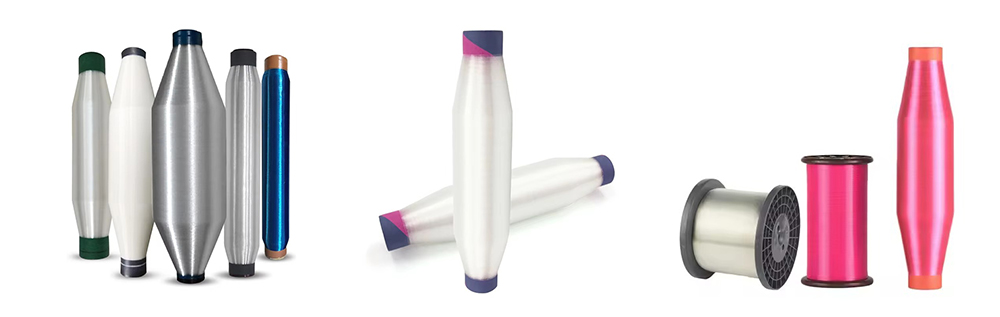
- Linear Density and Filament Diameter: 20D–30D (0.05–0.07mm) is soft and transparent, suitable for high-density garment woven labels and embroidery; 40D–70D (0.08–0.11mm) balances flexibility and crispness, commonly used in fashion satin ribbons and mesh fabrics; 100D and above (0.12–0.30mm+) offers strong support, specifically designed for shoe mesh fabrics and industrial filter meshes.
- Luster Level: Bright has a high refractive index, suitable for brilliant ribbons and gift packaging tapes; Semi-dull has a soft, natural sheen, making it the mainstream choice for garment accessories; Full-dull presents a matte texture, fitting understated functional fabrics.
- Coloring and Color Fastness: For bulk customization, prioritize masterbatch dope-dyed colored monofilament, where color pigments are uniformly blended into the matrix before spinning, achieving a washing and light fastness of Grade 4–5 and completely eliminating batch color differences and uneven shrinkage caused by post-dyeing.
- Thermal Shrinkage and Twisting/Setting: Downstream high-temperature setting temperatures (typically 160°C–190°C) must be confirmed in advance, requiring the factory to perform pre-heat setting to control boiling water shrinkage; for weaving processes requiring higher cohesion and anti-curling properties, moderately twisted monofilament can be selected.
Through scientific breakdown across these four dimensions, buyers can translate vague "hand-feel requirements" into precise laboratory technical indicators. Before officially placing a bulk order, it is strongly recommended to request physical indicator test sheets for the corresponding specifications from the supplier (including breaking strength, elongation, boiling water shrinkage, and diameter deviation values) and arrange at least 1–2 kg of on-loom trial weaving verification to ensure the yarn achieves an optimal match with your own machine tension system.
How to Select a High-Quality Nylon Monofilament Factory
In an era of highly transparent B2B cross-border procurement, the market is flooded with numerous intermediary trading companies and small workshops. They often lack core spinning and twisting equipment, and once encountering peak-season raw material fluctuations or special color shade orders, serious incidents such as out-of-control delivery times, uneven filament diameters, or even mixed-batch wrong shipments easily occur. For textile enterprises focusing on long-term supply chain security, penetrating intermediary links and accurately locking in a source monofilament yarn supplier that truly possesses hardcore manufacturing strength is a mandatory course for building a product moat.
- Verify Year of Establishment and Reputation: Spinning and twisting rely heavily on the accumulation of process data; prioritize veteran manufacturers with 30–40+ years of continuous operational history, whose mature temperature control and drawing parameters can significantly reduce sampling trial-and-error costs.
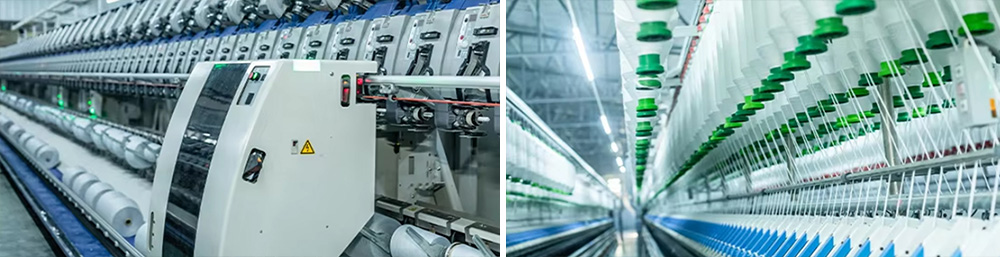
- Inventory Core Equipment Scale: A true source factory should possess a complete equipment chain; focus on inspecting whether it is equipped with scaled POY spinning equipment, drawing machines, precision twisting machines, and warping machines, as factories with a total of over 400 machines can better guarantee filament diameter consistency.
- Evaluate Daily Stable Production Capacity: Capacity determines peak-season delivery capability; modern factories with high production capacities at the 20 tons per day level can achieve rapid dispatch of regular stock and fast scheduling of custom orders, preventing downstream weaving mills from halting production due to material shortages.
- Inspect Independent R&D and Laboratories: Confirm whether the factory has an independent R&D and testing center equipped with tensile testers, evenness testers, and colorimeters to ensure that the denier deviation, breaking strength, and color difference values of every batch of outgoing yarn are within controllable tolerances.
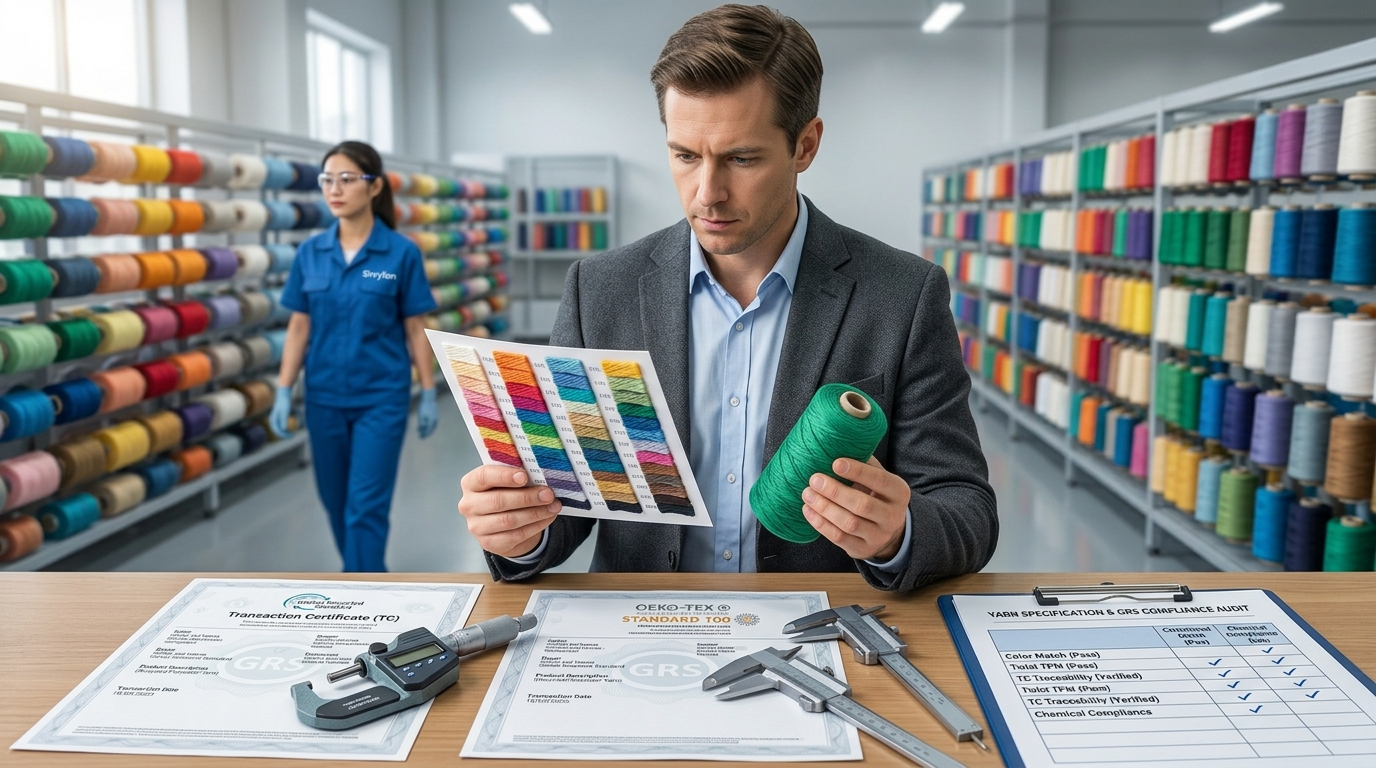
- Check International Authoritative Certifications: Factories serving major global markets must hold valid ISO9001 Quality Management System Certification and Oeko-Tex Standard 100 Ecological Textile Certification to ensure products meet international environmental protection and skin-contact safety access standards.
Having mastered these five factory audit criteria, buyers can quickly strip away marketing rhetoric and accurately identify strategic-grade manufacturing partners truly worthy of long-term trust. Directly connecting with source factories equipped with a complete equipment matrix, massive daily capacity, and international certifications not only saves you 15%–25% in intermediary markups, but also provides firsthand technical process support.
Product Advantages of Sinrylion Nylon Monofilament Yarn
As a benchmark enterprise in China's major textile manufacturing hub, Sinrylion has consistently focused on the R&D and scaled manufacturing of high-quality yarns since its establishment in March 1983. After over 40 years of steady development, the company has gathered 101–200 experienced technical R&D and production management backbones, with annual sales steadily remaining in the USD 2 million to USD 5 million range. Relying on an outstanding quality reputation, it has won the long-term trust of textile buyers across Fujian, Guangdong, Zhejiang, Hong Kong, as well as Europe, Southeast Asia, and around the world. Backed by the deep technical accumulation and modern manufacturing system of a source factory, the nylon monofilament yarn produced by Sinrylion demonstrates six core product advantages in the international market:
- Ultra-High Diameter Uniformity and Toughness: Relying on over 400 advanced spinning and twisting machines, micron-level filament diameter precision control is achieved; the monofilament has a round, full cross-section and high breaking strength, running smoothly in high-speed weaving without breakage or fuzzing.
- Color Library of Over 1,000 Vibrant Shades: A vast color card system covering over 1,000 vibrant shades has been built using high-dispersion masterbatch technology, featuring bright, full colors, minimal batch color differences, and support for precise customization based on Pantone codes and customer samples.
- Precision Twisting and Multi-Specification Adaptability: Leveraging approximately 200 professional twisting machines in the factory, in addition to conventional raw white monofilament, twist and heat-setting parameters can be customized on demand to perfectly adapt to high-density woven labels, warp-knitted mesh fabrics, and narrow ribbon looms.
- Rapid Delivery Guarantee of 20 Tons Daily Output: A powerful machinery matrix supports a stable daily output of up to 20 tons per day; whether for small-batch urgent replenishment orders or annual bulk centralized procurement contracts, fast production scheduling and on-time delivery can be achieved.
- Dual International Authoritative Environmental and Quality Certifications: Relying on strict quality control from an in-house R&D center and testing center, the entire series of nylon monofilament has passed ISO9001 and Oeko-Tex Standard 100 certifications, meeting the environmental access requirements of global high-end brands.
- High Cost-Effectiveness from Source Direct Supply and Technical Support: Over 40 years of factory-direct supply eliminates intermediary markups, and a professional technical team is ready at any time to provide on-loom tension adjustment and specification selection guidance, helping buyers significantly reduce comprehensive production costs.
Choosing Sinrylion's nylon monofilament means you not only obtain a tough, vibrant, zero-defect high-quality textile raw material, but also gain a modern rear factory operating efficiently around the clock. Whether your enterprise is in the product R&D sampling stage or seeking a more competitive primary supplier alternative, we will safeguard your commercial success with forty years of unwavering craftsmanship.