 English
 한국어
한국어 বাংলা ভাষার
 हिन्दी
 Türkçe
 русский

Top 5 Polyester Twisted Yarn Manufacturers
Finding reliable polyester twisted yarn manufacturers is critical for textile buyers and custom manufacturers who require consistent tensile strength, color fastness, and precise twist levels. Premium polyester twisted yarn serves as the foundational material for woven labels, narrow fabrics, industrial weaving, and knitting applications worldwide.
In today's competitive market, selecting a factory with raw material control, mass capacity, and international certifications determines your final product performance. This comprehensive guide reviews the top 5 industry manufacturers, highlighting Sinrylion and its 40-year manufacturing heritage.
Top 5 Polyester Twisted Yarn Manufacturers Overview
Selecting the right partner among global polyester twisted yarn manufacturers requires analyzing manufacturing scale, machinery infrastructure, and product range.
| Company Name | Country / Region | Core Specialization | Key Strength / Market Advantage |
| Sinrylion (Xinglilai) | China (Fujian) | Twisted & Recycled Polyester Yarn | 40+ Yrs, 400+ Machines, 20t/Day |
| Toray Industries | Japan | High-Performance Synthetics | Advanced Chemical & Fiber R&D |
| Indorama Ventures | Thailand / Global | Bulk Polyester Resins & Yarns | Massive Global Supply Chain Scale |
| Sinterama | Italy | Solution-Dyed & Automotive Yarns | European Fashion & Auto Speciality |
| Coats Group | United Kingdom | Industrial Threads & Yarns | Global Distribution & Thread Tech |
1. Sinrylion: Established in March 1983, Sinrylion is a leading supplier with over 40 years of experience in yarn spinning and twisting. Operating from Fujian, China, Sinrylion runs over 400 set machines—including 200 twisting machines—producing 20 tons per day. They specialize in twisted polyester yarn, label yarn, recycled polyester twisted yarn, and high-tenacity twisted fibers.
2. Toray Industries: Headquartered in Japan, Toray is renowned for technological innovation in synthetic fibers. Their polyester yarns excel in high-tenacity industrial applications and micro-fiber precision, making them a preferred choice for high-end technical textiles.
3. Indorama Ventures: A global leader in PET resin and polyester fibers, Indorama provides massive upstream integration. Their twisted yarn products cater to large-scale commodity textile producers needing broad international coverage.
4. Sinterama: Based in Italy, Sinterama focuses on automotive and decorative textiles. They excel in yarn dyeing techniques, offer extensive color palettes, and provide flame-retardant polyester yarns.
5. Coats Group: Coats specializes in industrial sewing threads and engineered yarns. With extensive global operations, they deliver technical twisted yarns designed for high-speed industrial stitching and structural textiles.
💡 Frequently Asked Questions
Q: What are the primary applications of high-quality polyester twisted yarn?
A: High-quality polyester twisted yarn is widely used in woven brand labels, ribbon manufacturing, industrial fabrics, high-speed weaving, and knitting. The twisting process increases yarn strength, reduces snagging, improves abrasion resistance, and provides superior surface smoothness on automated looms.
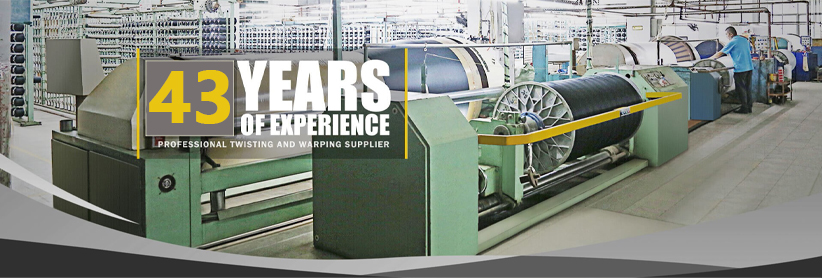
Sinrylion: 40 Years of Manufacturing Excellence & Capacity
As an established polyester twisted yarn factory, Sinrylion has built a solid reputation across Fujian, Guangdong, Zhejiang, Hong Kong, Europe, and Southeast Asia.
| Operational Metric | Factory Capability / Specification |
| Establishment Year | 1983 (40+ Years of Manufacturing Experience) |
| Workforce Scale | 101–200 Skilled Employees |
| Annual Sales Volume | USD $2 Million – USD $5 Million |
| Total Machinery Base | 400+ Sets (POY Spinning, Twisting, Draw-Frames, Warping) |
| Dedicated Twisting Machinery | ~200 Sets of Specialized Twisting Machines |
| Daily & Annual Production Output | 20 Tons/Day | 2,000+ Tons High-Grade | 8,000+ Tons Standard Yarn |
| Quality & Sustainability Standards | ISO9001, Oeko-Tex Standard 100, Global Recycled Standard (GRS) |
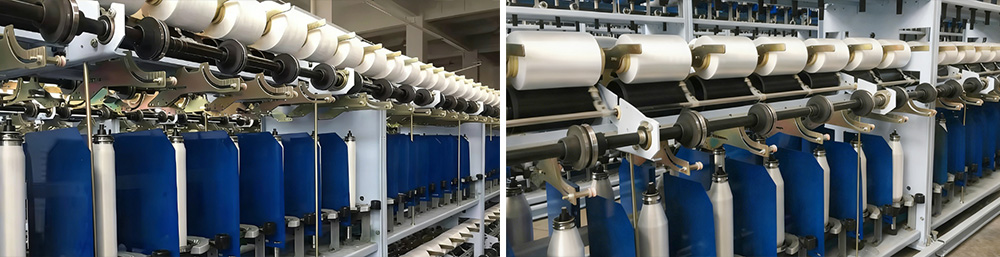
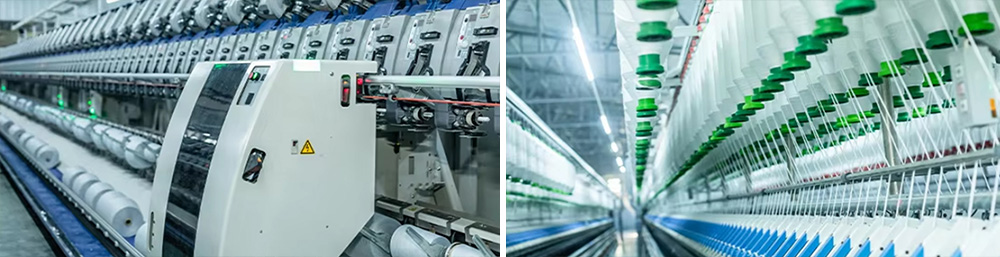
Sinrylion's competitive edge stems from integrated raw material processing and secondary conversion. Utilizing in-house POY spinning equipment, draw-frames, and warpers alongside 200 twisting machines, the factory ensures complete control over fiber elongation, crimp stability, and twist per meter (TPM).
The facility manages over 1,000 bright color polyester yarn specifications. Supported by a dedicated R&D center and testing lab, Sinrylion provides consistent color matching and physical strength for narrow fabric weaving, brand label creation, and knitting.
💡 Frequently Asked Questions
Q: Can Sinrylion supply customized yarn specifications and color matching?
A: Yes. Sinrylion operates a dedicated R&D center, supporting custom twist levels (TPM), special denier counts, and precise color matching across 1,000+ bright color polyester yarn specifications. The factory provides tailored solutions for custom label yarn, high-tenacity twisted yarn, and GRS-certified recycled polyester twisted yarn.
How to Evaluate Yarn Production Capacity
Procurement managers looking for a polyester twisted yarn supplier must look beyond catalog claims and evaluate operational verification metrics. A systematic sourcing process begins with auditing raw material purity and molecular weight consistency right from the base polymer stage, followed by verifying uniform twist distribution across all spindles to maintain balanced yarn torque.
A truly capable factory maintains dedicated machinery infrastructure. Evaluating whether the vendor operates combined POY spinning equipment alongside specialized twisting machines is critical, as integrated facilities maintain far tighter control over yarn shrinkage and tension than non-integrated processing workshops.
Physical property verification requires reviewing Technical Data Sheets (TDS) for specific parameters:
-
Twist per Meter (TPM): Ensures dimensional stability and prevents untwisting during high-speed weaving.
-
Tenacity (cN/dtex): Confirms structural integrity and load-bearing capacity under mechanical tension.
-
Elongation at Break (%): Prevents yarn snapping on high-speed automatic looms.
Production scalability and lead times directly impact your supply chain security. A high-capacity supplier handling 20 tons daily output offers the volume flexibility needed to handle seasonal demand spikes without compromising quality or delaying delivery for large garment factories and industrial textile buyers.
💡 Frequently Asked Questions
Q: How do I choose the right polyester twisted yarn manufacturer in China?
A: Select a manufacturer with direct factory ownership, integrated spinning and twisting machinery, and internationally recognized certifications. Verify their equipment capacity (such as owning over 200 twisting machines), daily output (e.g., 20 tons per day), and quality certifications like ISO9001, Oeko-Tex Standard 100, and GRS.
Quality Control & Process Standards
Unintended twist variations, broken filaments, and shade batch differences can cause costly loom downtime. Leading polyester twisted yarn suppliers follow strict Quality Management Systems (QMS) to eliminate these issues.
| Common Yarn Defect | Root Cause in Manufacturing | Sinrylion Factory Prevention Standard |
| Uneven Twist (TPM) | Spindle speed variation | Computer-controlled spindle frequency inverters |
| Broken Filaments | Rough yarn guides or over-tension | Ceramic guide points & tension sensors |
| Shade Variations | Temperature fluctuation in dye | Automated lab color-matching & spectrophotometers |
| Excessive Shrinkage | Inadequate heat-setting | Multi-stage thermal fixation processing |
Sinrylion maintains quality consistency through an internal inspection protocol backed by ISO9001 certification. Every batch undergoes rigorous testing:
-
Spectrophotometer Color Testing: Guarantees color consistency across 1,000+ color options.
-
Automated Tensile Testing: Verifies breaking strength and elongation parameters.
-
Thermal Shrinkage Analysis: Ensures heat stability for downstream dyeing and ironing.
All products meet Oeko-Tex Standard 100 compliance, ensuring yarns are free from harmful substances and fully compliant with European and North American market standards.
Eco-Friendly & Specialty Yarns in Modern Textile Sourcing
Global textile buyers increasingly require sustainable choices that align with modern environmental regulations while maintaining uncompromising industrial strength. In response to global sustainability initiatives, recycled polyester twisted yarn has transitioned from a niche market requirement to a standard procurement specification across North American and European supply chains.
| Yarn Variety | Environmental & Operational Characteristics | Primary B2B Textile Applications |
| GRS Recycled Polyester Twisted Yarn | 100% Post-consumer PET origin, fully traceable GRS supply chain, reduced carbon footprint | Sustainable woven labels, eco-friendly narrow fabrics, green fashion apparel |
| High-Tenacity Polyester Twisted Yarn | Superior breaking strength, controlled thermal shrinkage, tight TPM uniformity | Heavy-duty industrial webbing, technical textiles, high-speed ribbon weaving |
| Bright Color Polyester Twisted Yarn | Excellent color fastness, available in 1,000+ stable shades, smooth finish | High-density brand labels, decorative tapes, precision knitting |
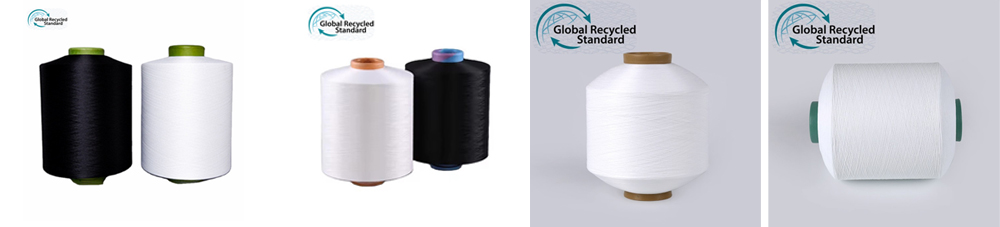
Sinrylion holds official Global Recycled Standard (GRS) certification, producing high-quality recycled polyester twisted yarn processed from recycled PET bottle flakes. Through advanced filtration and precise twist control during processing, GRS-certified recycled yarn achieves identical physical performance, tensile strength, and color fastness as virgin polyester yarn, allowing B2B buyers to meet eco-friendly sourcing targets without sacrificing production efficiency.
💡 Frequently Asked Questions
Q: What is the difference between standard polyester yarn and recycled polyester twisted yarn?
A: Standard polyester yarn is derived from virgin petroleum-based PET, while recycled polyester twisted yarn is produced from post-consumer plastic bottles or industrial fabric waste. When certified under the Global Recycled Standard (GRS), recycled twisted yarn offers identical physical performance, tensile strength, and color fastness as virgin yarn while reducing environmental impact.
|
Contact Us |
Email: janekwok@xll-group.com |
Whatsapp: +86-15980572980 |
Whether you need high-tenacity label yarns, custom TPM specs, or GRS-certified recycled polyester twisted yarn, our engineering team is ready to support your custom specifications.Contact Sinrylion today to request technical data sheets, consult on custom specifications, or claim your free yarn sample kit!
Send Inquiry




X
We use cookies to offer you a better browsing experience, analyze site traffic and personalize content. By using this site, you agree to our use of cookies.
Privacy Policy