 English
 한국어
한국어 বাংলা ভাষার
 हिन्दी
 Türkçe
 русский

Polyester Yarn Comparison: Twisted Yarn vs. Regular Polyester Yarn
As a professional polyester yarn company, we often encounter the same question from textile buyers and custom manufacturers: in actual weaving and knitting processing, should one choose regular polyester yarn or polyester twisted yarn?
Simply put, the core difference between regular polyester yarn and twisted polyester yarn lies in their physical structure and cohesion. In regular polyester yarn, the fibers are arranged in parallel, offering a soft and smooth feel with high cost-effectiveness; whereas twisted polyester yarn applies torque through machinery to tightly bind fibers spirally, significantly enhancing tensile strength, wear resistance, and dimensional stability.
Since its establishment in 1983, Sinrylion has been deeply involved in yarn manufacturing for over 40 years. Leveraging our strong production scale and advanced technical equipment, we have summarized this in-depth comparison guide to help you make the wisest purchasing decisions.
What is Regular Polyester Yarn?
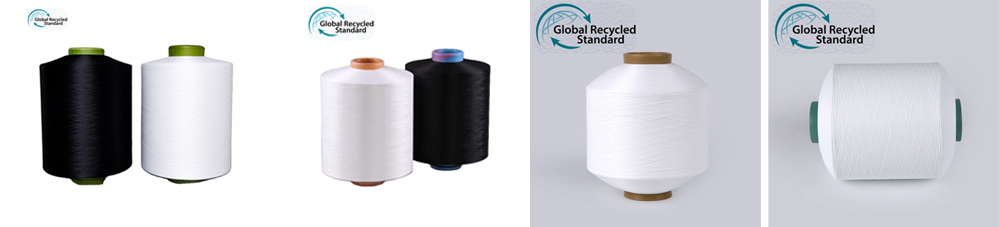
Regular polyester yarn (usually referring to melt-spun or drawn yarn without additional twisting, such as POY, FDY, or low-twist DTY) is one of the most widely used basic materials in the modern textile industry. Its fibers are arranged in parallel along the axial direction without going through heavy spiral twisting processing.
Main Features
-
Soft and Smooth Touch: Because the fibers are not tightly twisted together, the yarn maintains its natural fluffiness and delicate feel, making it very suitable for fabrics with high requirements for next-to-skin comfort.
-
High Cost-Effectiveness: The production process is relatively direct, eliminating secondary twisting and heat-setting steps, which greatly reduces manufacturing costs and makes it suitable for bulk standardized purchasing.
-
Basic Strength and Extensibility: It possesses the inherent good wrinkle resistance, light resistance, and basic tensile strength of polyester fiber.
-
Excellent Processing Adaptability: It easily absorbs dyes and performs smoothly in plain weaving or circular knitting.
Manufacturing Process
The production of regular polyester yarn begins with high-quality polyester chips (PET), which undergo high-temperature melt spinning to form primary fibers, followed by drawing orientation and network setting. The focus of the entire process is to ensure the uniformity of individual filaments and the consistency of physical properties.
Quality Standards
High-quality regular polyester yarn must comply with the ISO 9001 quality management system certification and obtain the OEKO-TEX Standard 100 eco-textile certification to ensure that the product has no harmful chemical residues and meets global environmental and safety procurement standards.
💡 Frequently Asked Questions
Q: What is regular polyester yarn best used for?
A: Regular polyester yarn is ideal for textiles pursuing high cost-effectiveness and a soft, delicate feel, such as daily seamless knitted garments, basic apparel fabrics, home textile base fabrics, and low-cost linings.
What is Polyester Twisted Yarn?
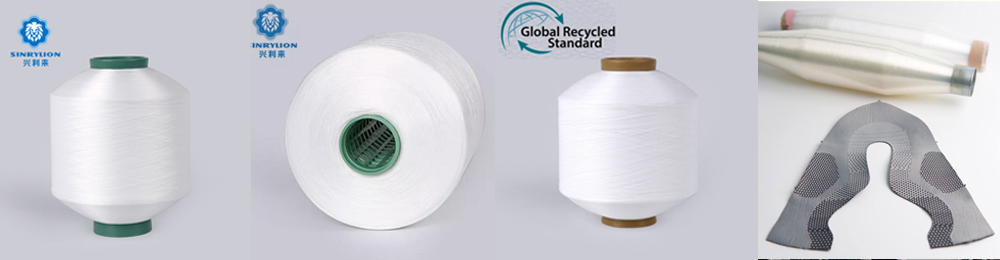
Polyester twisted yarn is an advanced yarn in which regular polyester monofilaments or multifilaments are subjected to torque in a specific direction (S twist or Z twist) (TPM, twists per meter) through professional twisting equipment, making loose fibers tightly coiled together.
Common Twisting Types
-
Low Twist / Medium Twist / High Twist: Depending on the end use of the product, the twists per meter can be adjusted from a few hundred twists to over a thousand twists. The higher the twist, the stronger the stiffness and structural stability of the yarn.
-
Single-Ply and Multi-Ply Retwisting: Combining two or more single yarns together before applying twist can multiply the thickness, tensile breaking strength, and wear resistance of the yarn.
-
Functional Twisted Blends: It can be combined with GRS (Global Recycled Standard) certified recycled polyester, nylon, or monofilaments (PA6, TPU, TPEE) for composite twisting to meet special industrial needs.
Manufacturing Process
The production of twisted yarn has extremely high requirements for equipment tension control. After being bundled by a draw frame, the fibers are fed into a professional twisting machine for high-speed twisting, and then must undergo a strict heat-setting process to eliminate residual stress, preventing the yarn from untwisting or knotting in subsequent weaving.
Quality Standards
In addition to ISO 9001 and OEKO-TEX Standard 100, high-end twisted yarn usually needs to comply with GRS certification to ensure that fiber sources are traceable and physical indicators (such as TPM uniformity and breaking elongation) reach international industrial-grade standards.
💡 Frequently Asked Questions
Q: Why is polyester yarn twisted during manufacturing?
A: Twisting tightly binds loose parallel fibers together, significantly improving the breaking strength, wear resistance, and anti-pilling performance of the yarn, while preventing yarn breakage or snagging on high-speed looms.
Performance Comparison: Regular Polyester vs. Twisted Polyester
To help you perform material selection more intuitively, we have summarized the core physical properties of the two yarns below:
| Performance Indicator | Regular Polyester Yarn | Polyester Twisted Yarn | Selection Advice and Notes |
| Breaking Strength & Wear Resistance |
Meets basic tension, easy to slip during high-speed weaving |
Strength increased by 25%–40%, tight structure, extremely wear-resistant |
Choose regular yarn for basic apparel; choose twisted yarn for high-strength industrial webbing/sewing thread. |
| Anti-Pilling Property |
Fibers are loose, easy to pill under frequent friction |
Spiral structure tightly locks fibers, excellent anti-pilling property |
Choose regular yarn for light underwear; choose twisted yarn for outerwear and trademark labels subject to frequent friction. |
| Dimensional Stability & Stiffness |
Soft and drape feeling, moderate stability |
Excellent setting effect, stable structure without shrinkage,crisp and shaped |
Choose regular yarn for soft feel; choose twisted yarn for structure and shape retention. |
| Luster & Color Performance |
Presents smooth reflection luster, uniform color absorption |
Luster has a 3D refraction feel,supports 1000+ bright color customization |
Choose regular yarn for basic bulk dyeing; choose twisted yarn for high-saturation bright trademark yarn. |
| Cost-Effectiveness & Added Value |
Fewer processes, lower cost, suitable for bulk production |
Processing steps increased, high added value, long service life |
Choose regular yarn for budget-sensitive products; choose twisted yarn for high-quality/functional products. |
💡 Frequently Asked Questions
Q: Is twisted polyester yarn stronger than regular polyester yarn?
A: Yes, the twisting process makes fiber forces more even and significantly enhances friction between monofilaments. Under the same specification, the tensile breaking strength of twisted polyester yarn is usually 25%–40% higher than that of regular polyester yarn.
Application Scenarios and Selection Guide
In actual production, choosing which yarn depends on your end-product positioning, processing procedures, and cost budget.
Division of Application Scope
Regular Polyester Yarn
-
Seamless Knitting and Underwear: Utilizing its smooth and delicate feel to provide a seamless and comfortable fitting experience.
-
Basic Apparel Fabrics: Used for large-scale knitting weaving of T-shirts, shirts, and daily casual wear.
-
Home Textiles and Linings: Bed sheets, curtain base fabrics, and low-cost garment lining materials.
Polyester Twisted Yarn
-
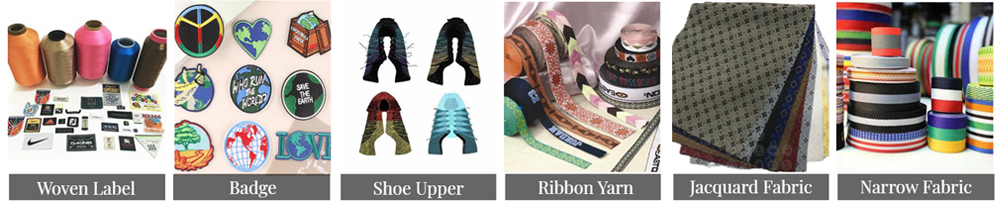
High-End Woven Labels and Trademark Labels (Label Yarn): High twist level ensures smooth label edges without frayed cuts, with high clarity of text and patterns.
-
High-Strength Industrial Webbing and Sewing Threads: Withstands high tension stretching and high-speed sewing friction.
-
Shoe Materials and Automotive Interiors: Provides excellent snagging resistance, wear resistance, and long-term dimensional stability.
-
Special Ribbons and Weaving: Gives fabrics a crisp, shaped appearance and vivid color refraction.
Four Key Selection Factors for Buyers
-
Physical Strength Requirements: If the product needs to withstand strong tension or high-frequency friction, twisted yarn is the first choice.
-
Post-Processing and Setting: For narrow fabrics that need high-temperature baking and strong press setting, twisted yarn performs more stably.
-
Budget and Efficiency: Regular yarn is suitable for bulk cost-control orders; although the processing fee for twisted yarn is slightly higher, it can significantly enhance the premium space of the final product.
-
Feel and Appearance: Choose regular yarn for softness and drape; choose twisted yarn for a 3D texture and crispness.
💡 Frequently Asked Questions
Q: How do I choose between twisted and regular polyester yarn for my production?
A: The core evaluation lies in usage: if you pursue ultimate feel and cost control, choose regular polyester yarn; if you need high tensile strength, anti-pilling, friction resistance, and excellent crisp setting effects, you should prioritize polyester twisted yarn.
Sinrylion's Factory Capabilities in Twisted and Regular Polyester Yarn
As a leading polyester yarn company, Sinrylion not only possesses deep manufacturing heritage, but also has the production scale to meet personalized customization needs of global customers.
40 Years of Industry Expertise and Scaled Production Capacity
-
Source Manufacturer: Founded in March 1983, the company has over 40 years of professional yarn spinning and twisting experience, with 101–200 employees and annual sales maintained between $2 million and $5 million.
-
Equipment Strength: The factory area owns 400+ units of various advanced machinery and equipment, covering POY spinning equipment, draw frames, twisting machines, warping machines, etc. Among them, we specifically feature about 200 twisting machines, making us a veritable polyester twisted yarn production base in the region.
-
High Output and Efficiency: The company can produce 20 tons of yarn per day, with an annual output of 2000+ tons of high-grade polyester twisted yarn, 8000+ tons of regular yarn, and a total annual capacity exceeding 10,000 tons.
Authoritative Certifications and Strict Quality Control
-
Authoritative Systems: The company has fully passed ISO 9001 quality management system certification, OEKO-TEX Standard 100 eco-textile certification, and GRS Global Recycled Standard certification.
-
Quality Inspection & R&D: The factory houses an independent R&D center and testing center to strictly inspect yarn tensile force, TPM uniformity, and color fastness batch by batch.
-
1000-Color Library: Possesses in-stock and custom capabilities for 1000+ bright color polyester yarns, ensuring accurate and stable long-term color supply.
Global Cooperation and Flexible Customization
Our partners span Fujian, Guangdong, Zhejiang, Hong Kong, Europe, Southeast Asia, and other regions. Whether it is label yarn, polyester twisted thread, nylon twisted thread, recycled yarn, or monofilament yarn (PA6, TPU, TPEE), we can provide professional OEM/ODM custom solutions according to the TPM, denier, and color requested by customers.
💡 Frequently Asked Questions
Q: Can Sinrylion customize polyester yarn twist levels, deniers, and colors?
A: Yes. Sinrylion owns 200+ professional twisting machines and a library of 1000+ bright colors in stock, supporting full-parameter customization (including twist level TPM, specification denier, and eco-friendly recycled materials), and provides fast free sample delivery services.
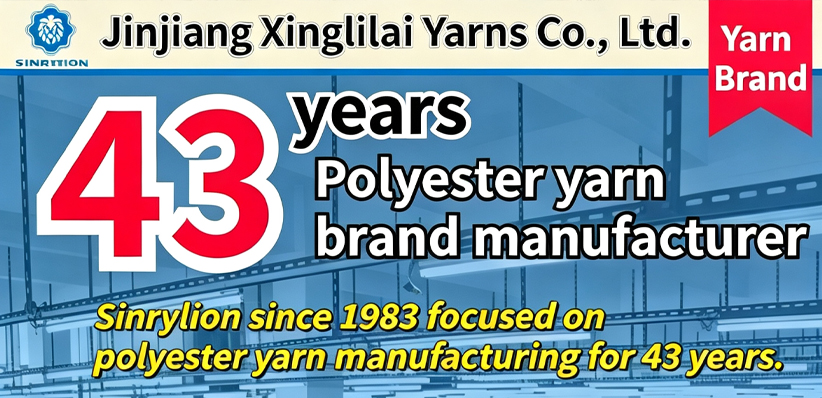
Whether choosing economical and soft regular polyester yarn or high-strength, crisp polyester twisted yarn, matching your specific production needs is the key. Regular yarn offers you superior cost control and comfort, while twisted yarn safeguards high-value-added products with its wear resistance, tensile strength, and high dimensional stability.
As a polyester yarn company with one-stop production capabilities, Sinrylion relying on 40+ years of manufacturing experience, 400+ units of automated equipment, and international authoritative certifications, is ready at any time to provide high-quality, stable-supply yarn solutions for your textile business.
Contact Us:
Welcome to visit our factory for guidance! Feel free to contact our team of professional engineers at any time to obtain free samples and customized quotes.
Send Inquiry




X
We use cookies to offer you a better browsing experience, analyze site traffic and personalize content. By using this site, you agree to our use of cookies.
Privacy Policy